
2026 World Cup Kansas City vs Other Hosts: Fan Access
Kansas City’s 2026 World Cup experience is best understood as a compact, transport-led host-city model rather than a stadium-only event. World Cup Hub tracks the FIFA World Cup 2026 across match predi...
2026 World Cup Kansas City vs Other Hosts: Fan Access
Kansas City’s 2026 World Cup experience is best understood as a compact, transport-led host-city model rather than a stadium-only event. World Cup Hub tracks the FIFA World Cup 2026 across match predictions, team tactics, player stats, and tournament coverage for fans who want sharper decisions before and during the event. In Kansas City, the key assets are Kansas City Stadium, Kansas City International Airport, ConnectKC26 motorcoach services, and the FIFA Fan Festival Kansas City, all serving visitors across Missouri and Kansas. The tournament runs from June 11 to July 19, 2026, across 16 host cities in the United States, Canada, and Mexico, according to FIFA. The practical takeaway is simple: plan transport first, then tickets, then entertainment, because match-day timing will decide whether your World Cup trip feels seamless or stressful.
Photo by David McBee on Pexels
Some fans will treat the 2026 World Cup like a quick stadium visit; smarter fans will treat Kansas City as a connected match-day ecosystem. That distinction matters because the official Kansas City host-city platform emphasizes direct rides from Kansas City International Airport, match-day service to Kansas City Stadium, regional connections, and the FIFA Fan Festival Kansas City. If you are comparing Kansas City with larger host markets such as New York New Jersey, Los Angeles, or Dallas, the question is not only which city has the biggest stadium. The better question is which host city gives you the cleanest path from airport arrival to kickoff, then from full-time to the fan zone, hotel, or next regional stop.
Want to compare host-city angles before you make plans?
If you are flying into Kansas City: do you book transport before hotels?
Yes, book transport assumptions before finalizing hotels because Kansas City’s 2026 World Cup plan relies heavily on direct motorcoach links among Kansas City International Airport, Kansas City Stadium, regional destinations, and the FIFA Fan Festival Kansas City.
Kansas City International Airport is likely to be the first operational bottleneck for many international and domestic fans, especially around marquee match days. The official local messaging around ConnectKC26 points to motorcoach services as a direct route to the “heart of the action,” which is useful because it reduces dependence on last-minute rideshare pricing, parking uncertainty, and unfamiliar highway navigation. A practical edge many general travel guides miss is that airport-to-stadium planning should be built around the slowest leg of the day, not the average leg. For a 7 p.m. kickoff, a fan who lands at 1 p.m. may still face immigration, baggage, SIM card setup, hotel drop-off, security screening, and food queues before entering Kansas City Stadium.
For a betting-informed reader following World Cup Hub, transport also affects match preparation. If you plan to track lineup news, player props, or tactical updates two hours before kickoff, you do not want that window consumed by a parking search or a delayed transfer. A better structure is to choose accommodation near a confirmed shuttle corridor, keep one offline map saved, and build a 90-minute buffer before stadium arrival. To go deeper on match-day preparation, see our 2026 World Cup match-day planning guide.
If you want the full fan experience: should you prioritize the FIFA Fan Festival Kansas City?
Yes, prioritize the FIFA Fan Festival Kansas City if your goal is atmosphere beyond the match ticket, because it is designed as the city’s central gathering point for live viewing, entertainment, food, and cultural exchange.
The FIFA Fan Festival concept matters because most World Cup visitors will not attend every match in person. According to FIFA’s host-city model, fan festivals create official public spaces where supporters can watch games, gather safely, and experience local programming. Kansas City’s version is positioned around good matches, food, entertainment, and people, which fits the city’s broader identity as a sports-driven region with strong barbecue, music, and neighborhood culture. The official local site also frames Kansas City as the Soccer Capital of America, a phrase that reflects its long-running investment in professional and grassroots football.

Photo by César O'neill on Pexels
There is a contrarian planning point here: the fan festival may be more valuable on non-match days than on match days. On match days, stadium logistics can dominate your schedule; on non-match days, the FIFA Fan Festival Kansas City can become the anchor for watching other national teams, comparing tactical styles, and experiencing the tournament without another ticket purchase. For fans using World Cup Hub to follow team tactics or player stats, that setting can also be useful for observing real-time public sentiment around favorites such as Brazil, France, Argentina, England, Spain, Germany, and the United States.
See the details before building your Kansas City itinerary.
To get the most from the festival, build your schedule around three layers: the match you came to Kansas City to watch, the neutral matches you want to see on big screens, and the local experiences you want outside football. The U.S. Department of State remains the best starting point for visa and international travel requirements, while FIFA and the Kansas City host-city platform should be treated as primary sources for ticketing, stadium access, and official fan-event updates. FIFA’s own tournament information states that the 2026 edition will be staged in “Canada, Mexico and the United States,” which makes cross-border travel planning more relevant than in a single-country World Cup. For related travel context, check our North America 2026 host city comparison.
If you are comparing Kansas City with bigger markets: what makes it different?
Kansas City differs from larger 2026 World Cup host cities by offering a more regionally concentrated experience, where airport transfers, stadium access, fan-zone movement, and local culture can be planned as one connected route.
Compared with Los Angeles or New York New Jersey, Kansas City is less about global-city scale and more about operational clarity. That can be an advantage for fans who value predictability. Larger cities offer more hotel inventory, more nightlife districts, and more international flight options, but they can also create longer cross-city transfers and higher last-mile complexity. Kansas City’s two-state regional identity, spanning Missouri and Kansas, gives visitors a distinctive setting without forcing them to decode a massive transit network on day one. The official Kansas City 2026 messaging highlights business, culture, innovation, sports passion, and diverse neighborhoods, which suggests the city wants visitors to move beyond the stadium gates.
A useful comparison is to think of Kansas City as a “medium-complexity” host. It is not as simple as walking from a downtown hotel to every event, but it may be easier to manage than a mega-market where airport, hotel, stadium, and fan festival are spread across large distances. The operational tip is to draw a triangle before booking: Kansas City International Airport, Kansas City Stadium, and FIFA Fan Festival Kansas City. If your hotel sits awkwardly outside that triangle, cheaper nightly rates may be offset by longer transfers, surge pricing, and lost recovery time between matches.
Common pitfalls to avoid
The most common Kansas City 2026 World Cup mistakes are underestimating transfer time, treating the Fan Festival as optional, relying only on rideshare apps, and ignoring official updates from FIFA and the local host committee.
First, avoid assuming that match-day travel will behave like an ordinary Kansas City weekend. Major tournaments compress thousands of visitors into the same arrival windows, and even efficient motorcoach systems still require boarding time, security coordination, traffic management, and post-match crowd dispersal. Second, do not plan your day around kickoff alone. Plan backward from stadium entry, then add time for food, merchandise, restrooms, and possible weather. The National Weather Service is a practical source for local forecasts, especially because summer heat and storms can influence outdoor fan activity in the central United States.

Photo by Sami Abdullah on Pexels
Here are the mistakes I would actively design around:
- Booking a hotel before mapping airport, stadium, and fan festival routes.
- Assuming rideshare availability will be normal immediately after full-time.
- Leaving mobile data, payment cards, or identity checks until match day.
- Scheduling a tight flight departure within a few hours of a major match.
- Ignoring non-match-day value at the FIFA Fan Festival Kansas City.
- Following only social media rumors instead of FIFA, Kansas City 2026, and official transport channels.
Get started with sharper World Cup planning and analysis.
A second overlooked pitfall is separating travel planning from football planning. If you follow betting markets, lineup reports, injury updates, or tactical previews, your best decision window may happen 60 to 120 minutes before kickoff. That is exactly when poorly organized fans are rushing through queues. World Cup Hub readers should protect that window by arriving early, downloading key team news sources, and setting alerts for confirmed lineups. This is not about gambling impulsively; it is about preserving attention when the highest-quality information becomes available. For more on responsible preparation, see our responsible World Cup betting checklist.
The 30-day check-in
Your 30-day Kansas City check-in should confirm transport reservations, hotel location, match tickets, Fan Festival plans, mobile connectivity, payment methods, weather gear, and official source alerts.
Thirty days before departure is the right time to move from inspiration to verification. By then, you should know which matches you are attending, whether you need airport motorcoach service, how you will reach Kansas City Stadium, and where the FIFA Fan Festival Kansas City fits into your schedule. This is also when international visitors should recheck passport validity, entry documentation, roaming plans, and card acceptance. If you are traveling in a group, assign roles: one person tracks official Kansas City 2026 updates, one manages tickets, one monitors transport, and one follows team news or World Cup Hub tactical coverage.
Use this 30-day sequence as a practical framework:
- Confirm FIFA ticket access and account credentials.
- Reserve or verify Kansas City airport and match-day transport.
- Map hotel routes to Kansas City Stadium and the Fan Festival.
- Save offline maps, emergency contacts, and weather alerts.
- Review team schedules, kickoff times, and possible knockout scenarios.
- Set a budget for food, merchandise, local transport, and entertainment.
- Build a lineup-news routine if you follow betting markets or player stats.
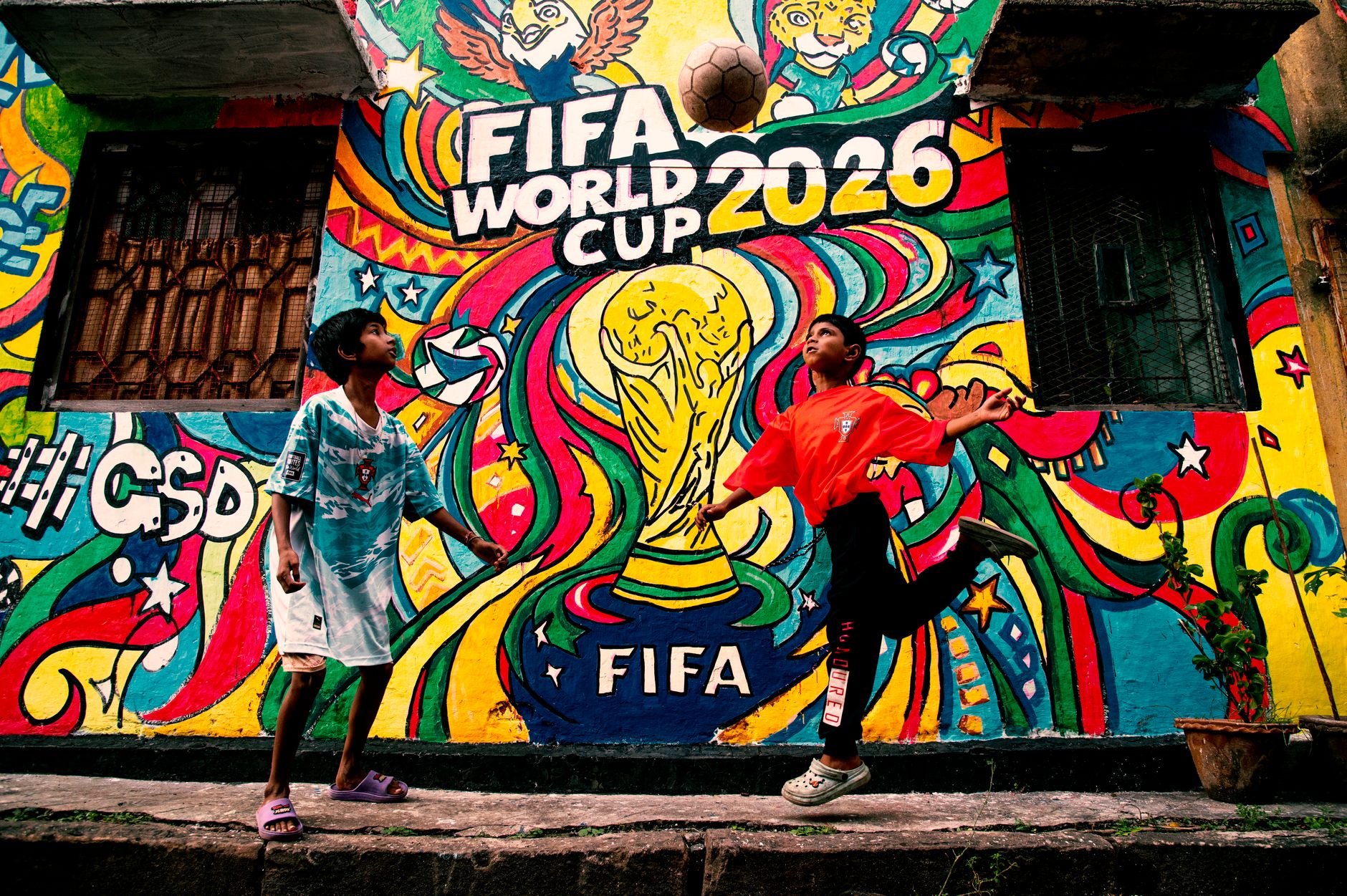
Photo by Anirban Das on Pexels
The final insight is that Kansas City may reward disciplined planners more than spontaneous travelers. Its appeal lies in connection: airport to stadium, match to festival, local culture to global football. If you lock in the basics early, you free your attention for what actually matters: the match, the crowd, the tactics, and the memory of being in one of the 16 host cities for the expanded 2026 World Cup.
Ready to follow the tournament with smarter daily insight?
Frequently Asked Questions
Q: What is the 2026 World Cup Kansas City experience?
A: The 2026 World Cup Kansas City experience is a host-city program built around Kansas City Stadium, Kansas City International Airport, ConnectKC26 transport, and the FIFA Fan Festival Kansas City. It combines match attendance with official fan entertainment, regional travel options, food, culture, and public viewing. Fans should treat it as a full-city event rather than only a stadium visit.
Q: How to get around Kansas City during the 2026 World Cup?
A: The best approach is to plan around official motorcoach routes, airport transfers, match-day stadium service, and fan festival connections. Start by mapping Kansas City International Airport, Kansas City Stadium, your hotel, and the FIFA Fan Festival Kansas City. Then add at least a 90-minute buffer before stadium entry to account for crowds, screening, and traffic.
Q: What is the difference between Kansas City and bigger 2026 World Cup host cities?
A: Kansas City offers a more concentrated and regionally connected fan experience, while larger host cities may provide greater scale but more complex transfers. Markets such as Los Angeles or New York New Jersey can involve longer cross-city travel and higher congestion. Kansas City’s advantage is that airport, stadium, festival, and local culture can be planned as one clearer route.
Q: Why does my Kansas City World Cup plan fail if I only book match tickets?
A: A ticket-only plan fails because World Cup match days depend on transport, timing, mobile access, security entry, and post-match movement. Fans who ignore airport transfers or fan festival logistics may lose hours in avoidable queues. Build your plan around the full day, not just the 90 minutes of football.
Q: How much does it cost to attend the 2026 World Cup in Kansas City?
A: Total cost depends on ticket category, hotel dates, flights, transport, food, and entertainment, but fans should budget beyond the match ticket. Summer 2026 demand may raise hotel and flight prices around Kansas City match dates. Add a separate allowance for airport transfers, local transport, Fan Festival spending, merchandise, and contingency costs.
Q: Is the FIFA Fan Festival Kansas City free?
A: Official FIFA Fan Festivals are commonly designed as public fan gathering spaces, but fans should verify final access rules through FIFA and Kansas City 2026. Even when entry is free, food, drinks, merchandise, and transport may cost extra. Check official updates before arrival because security rules, capacity controls, and schedules can change.
Thank you for reading.
World Cup Hub · Strategic Archive