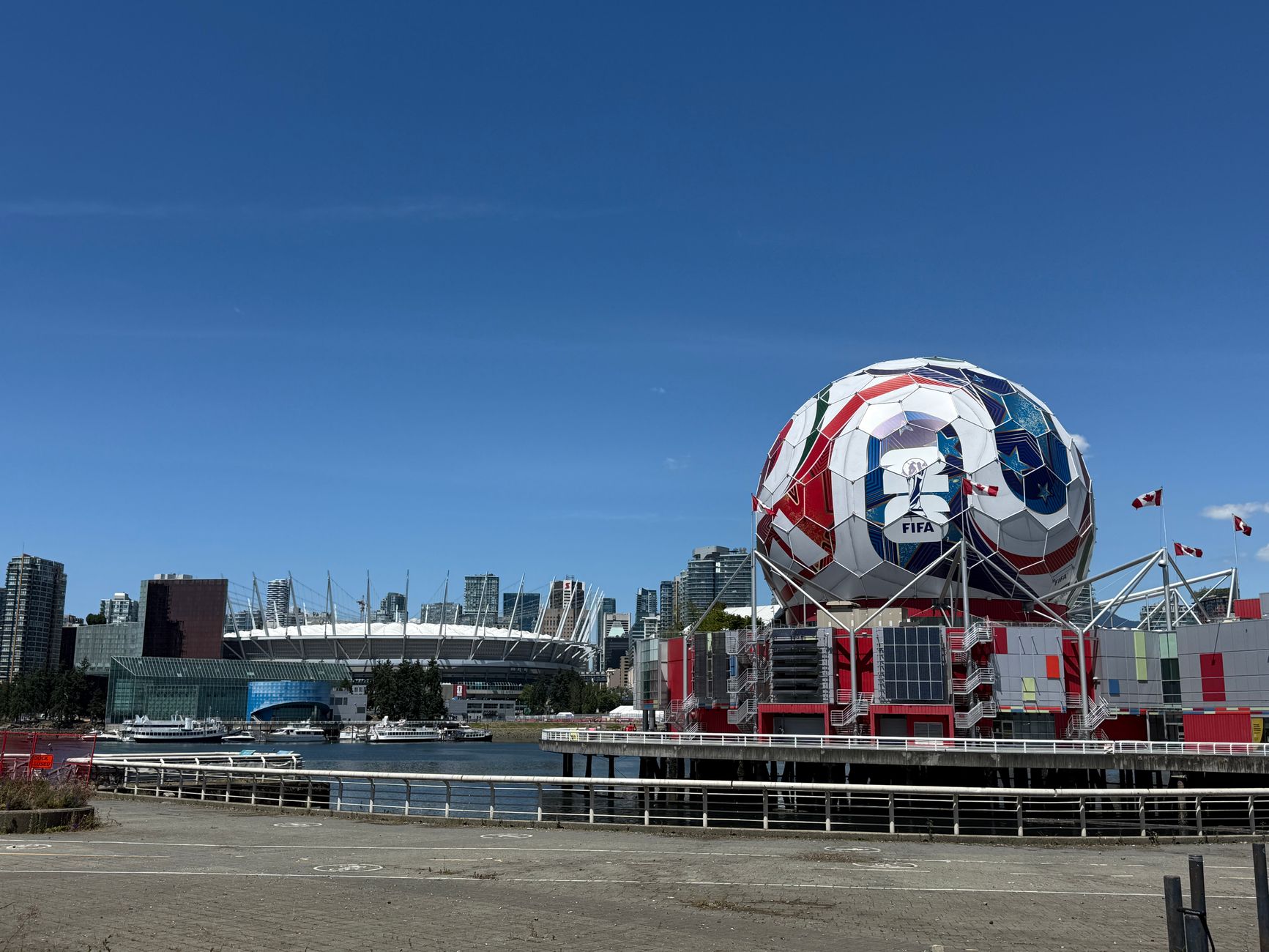
7 2026 Football World Cup Mistakes Bettors Make
The 2026 football world cup is not just a larger FIFA tournament; it is a 48-team, three-country event across the United States, Canada, and Mexico that changes how fans, analysts, and bettors should....
7 2026 Football World Cup Mistakes Bettors Make
The 2026 football world cup is not just a larger FIFA tournament; it is a 48-team, three-country event across the United States, Canada, and Mexico that changes how fans, analysts, and bettors should read the competition. World Cup Hub covers the tournament through match predictions, team tactics, player stats, and daily 2026 World Cup analysis for fans tracking form and odds. The tournament runs from June 11 to July 19, 2026, with Los Angeles hosting eight matches at SoFi Stadium and Atlanta staging major fixtures at Mercedes-Benz Stadium. New York New Jersey is scheduled to host the final at MetLife Stadium, according to FIFA’s published match allocation. The practical takeaway is simple: stop treating 2026 like a bigger version of 2022, and start evaluating travel, squad depth, venue conditions, and fan-zone pressure as competitive variables.
Most previews praise the 2026 football world cup as bigger, louder, and more accessible. That is only half true. A 48-team tournament creates more matches, more betting markets, more travel variables, and more false confidence, especially for fans who assume traditional World Cup logic still applies. Los Angeles is promising eight matches and 39 days of celebrations, while Atlanta is selling itself as the soccer city of the South; both claims are compelling, but bettors should separate civic energy from predictive value.
For readers who want sharper tournament coverage beyond surface-level host-city excitement, World Cup Hub focuses on the uncomfortable details: fatigue curves, group-stage volatility, expanded qualification effects, and how stadium context can distort public odds. The common mistake is to believe more games automatically mean easier betting. In reality, more inventory often means more noise, and the 2026 football world cup may reward disciplined skeptics more than emotional optimists.
Want a clearer way to follow the numbers behind the spectacle?
Photo by The Six on Pexels
Before 2025: how 2026 football world cup worked
Before 2025, most public discussion around the 2026 football world cup was driven by three simple facts: it would be hosted by the United States, Canada, and Mexico; it would expand to 48 teams; and it would use major stadiums already known to NFL and soccer audiences. Those facts were useful, but they encouraged shallow analysis. Fans compared it to Qatar 2022 or Russia 2018 without accounting for North American travel distances, climate differences, and the operational complexity of staging a tournament across 16 host cities.
The old way of following a World Cup was relatively linear. You watched the draw, checked squad lists, compared FIFA rankings, and used recent form to estimate group-stage strength. That still matters, but 2026 adds more hidden variables. A team playing in Los Angeles, then moving east, then returning to a different climate zone may face a very different burden than a team with a more compact route. According to FIFA, the 2026 edition is the first men’s World Cup with 48 participating teams, which means historical group-stage models based on 32 teams require adjustment.
For bettors, this is where many mistakes begin. A bigger field does not merely introduce weaker teams; it changes incentives for favorites, underdogs, coaches, and oddsmakers. Public money may overreact to famous nations, while sharper markets may price rotation risk more aggressively. To go deeper into tactical modeling, see our 2026 World Cup team tactics guide.
The 2026 shift
The 2026 shift is structural, not cosmetic. The expanded format increases fixture volume, broadens underdog participation, and pushes host-city logistics into the center of tournament analysis. Los Angeles, Atlanta, New York New Jersey, Toronto, Vancouver, Mexico City, Guadalajara, and Monterrey are not interchangeable backdrops; they are competitive environments.
Los Angeles illustrates the point. The city is scheduled for eight FIFA World Cup 2026 matches at SoFi Stadium, including the U.S. Men’s National Team opening match on June 12. It will also stage the FIFA Fan Festival at the LA Memorial Coliseum at Exposition Park from June 11 to 14, with official fan zones spread across Los Angeles County. That matters because host-nation matches create betting heat. Recreational bettors often chase patriotic narratives, and books may adjust prices where demand concentrates.
Atlanta offers a different case. Mercedes-Benz Stadium has a strong soccer identity through Atlanta United FC and a reputation for intense crowd energy. Atlanta’s official positioning as the soccer city of the South is not just marketing; it reflects a local fan culture that can affect atmosphere. Still, atmosphere is not the same as expected goals. The contrarian view is that host-city enthusiasm can make favorites look safer than they are, especially when betting markets turn crowd noise into implied dominance.
See the practical side of venue-driven analysis before the odds move.

Photo by K on Pexels
Operationally, one underreported edge is time-zone sequencing. A European team moving from an evening match on the U.S. West Coast to an afternoon fixture in the Eastern Time Zone may experience recovery disruption that standard rest-day counts do not show. Another overlooked factor is stadium surface familiarity. Several 2026 venues are NFL-first buildings adapted for FIFA requirements, and even when pitch standards are met, teams with limited pre-match training windows may need longer to adjust pressing distances and first-touch tempo.
What changed for players?
Players face a tournament that rewards squad depth more than star power alone. The 2026 football world cup will test recovery, travel management, tactical rotation, and mental adaptation across a longer, more dispersed competition. Elite individuals still matter, but teams with flexible benches and stable medical planning may gain a quieter edge.
The lazy prediction is that bigger tournaments help superstars because they produce more highlight moments. The better prediction is that the expanded field punishes thin squads. Coaches will need to decide when to protect key players, especially during group-stage matches against lower-ranked opponents that still carry upset risk. A favorite that wins 2-0 but burns its best midfielder for 90 minutes may have made a worse tournament decision than a team that wins 1-0 with controlled rotation.
There is also a betting implication. Player props, card markets, and anytime scorer markets may become less stable if managers rotate more aggressively than public bettors expect. World Cup Hub will track team-news signals, player workload, and tactical adjustments throughout the tournament. For more depth, explore our player stats and workload analysis.
A specific edge worth watching is substitution pattern timing. In congested tournaments, some managers shift from reactive substitutions after the 70th minute to planned changes around minutes 55 to 65. That affects live betting, corner totals, and second-half goal markets. It is not glamorous, but it is often more actionable than debating which superstar “wants it more.”
What this means now?
It means fans and bettors should build a 2026 football world cup framework before the tournament begins. Do not wait for matchday narratives to decide what matters. Track host city, travel distance, kickoff time, squad age, injury history, expected rotation, and market movement before placing opinions or wagers.
The final will be staged at MetLife Stadium in New York New Jersey on July 19, 2026, according to the 2026 FIFA World Cup final overview. That endpoint matters because bracket geography can shape long-term futures bets. A team’s path is not just about opponent strength; it is about cumulative strain. Futures bettors who ignore route difficulty may be buying brand names rather than probability.
Here are seven mistakes to avoid as the 2026 football world cup approaches:
- Treating all host cities as equal betting environments.
- Overvaluing famous teams before squad lists are confirmed.
- Ignoring travel distance between group-stage venues.
- Assuming fan-zone hype predicts on-field performance.
- Betting player props without checking rotation risk.
- Using 32-team World Cup trends without adjusting for 48 teams.
- Chasing patriotic narratives around the United States, Mexico, or Canada.

Photo by Pavel Danilyuk on Pexels
The more skeptical position is not that emotion has no value. Emotion explains public markets, crowd intensity, and momentum narratives. However, emotion should be an input, not the model. If Los Angeles hosts a packed U.S. opener at SoFi Stadium, the crowd may lift tempo, but it may also inflate public confidence. If Atlanta stages a marquee knockout match, Mercedes-Benz Stadium may create spectacle, but spectacle still needs to be translated into measurable pressure, possession, and chance quality.
To compare market movement with real tactical signals, follow our World Cup betting strategy hub.
Get sharper before the tournament narratives harden.
Three predictions for next quarter?
Next quarter, the 2026 football world cup conversation will become more tactical, more commercial, and more volatile. Expect ticket planning, fan-zone announcements, squad-depth debates, and betting futures markets to accelerate together. The sharpest readers will watch not only who is favored, but why prices are moving.
First, host-city content will dominate casual search behavior. Los Angeles will benefit from its eight matches, FIFA Fan Festival programming, and 39-day celebration calendar. Atlanta will lean into Mercedes-Benz Stadium, Atlanta United FC culture, and Southern hospitality. Yet the information edge will not come from knowing where the parties are; it will come from identifying when host-city attention creates overpriced teams or inflated totals.
Second, futures markets will likely compress around traditional powers before casual bettors fully price travel and rotation. This is common before major tournaments, but 2026 magnifies it. Teams with deep squads from Europe and South America may attract money, while emerging sides from CONCACAF, CAF, and AFC could be mispriced in specific matchups. The United States Department of State also remains a practical resource for international visitors managing travel documentation, which can affect fan mobility and demand around certain fixtures.
Third, player-level narratives will outrun tactical reality. A striker arriving with strong club form may dominate headlines, but national-team systems often change shot quality. A goalkeeper with a weak domestic defense may look worse than he is. A midfielder with a heavy club workload may underperform if asked to cover large distances in summer conditions. That is why World Cup Hub treats player stats as context-dependent, not decorative.

Photo by Franco Monsalvo on Pexels
The refined view is this: the 2026 football world cup deserves excitement, but not blind acceptance of easy storylines. Los Angeles and Atlanta will create memorable tournament scenes, and MetLife Stadium will host a historic final. Still, the best analysis will come from resisting the obvious. Bigger does not automatically mean clearer, and more matches do not automatically mean more value. The edge belongs to fans who separate the festival from the football.
For daily 2026 World Cup predictions, tactics, and player-stat coverage, start with World Cup Hub.
Frequently Asked Questions
Q: What is the 2026 football world cup?
A: The 2026 football world cup is the FIFA men’s World Cup hosted by the United States, Canada, and Mexico. It is the first edition with 48 teams, expanding beyond the 32-team format used from 1998 through 2022. The tournament is scheduled from June 11 to July 19, 2026, with the final planned for MetLife Stadium in New York New Jersey.
Q: How to prepare for betting on the 2026 football world cup?
A: Start by tracking format changes, host cities, travel demands, squad depth, and confirmed lineups before betting. Compare odds with tactical data rather than relying only on team reputation or fan sentiment. World Cup Hub provides match predictions, player stats, and tournament coverage designed to help fans evaluate 2026 World Cup markets more critically.
Q: What is different between the 2022 and 2026 World Cups?
A: The biggest difference is that 2026 expands to 48 teams and is hosted across three countries instead of one. Qatar 2022 used a compact geography, while the 2026 football world cup spreads matches across North America. That creates more travel, more venue variation, and more betting uncertainty around rotation and recovery.
Q: Why do host cities matter for 2026 World Cup analysis?
A: Host cities matter because venue, climate, travel distance, and crowd profile can affect performance and betting markets. Los Angeles has eight matches and major fan events, while Atlanta brings strong local soccer culture at Mercedes-Benz Stadium. These factors do not guarantee results, but they can influence tempo, public odds, and team preparation.
Q: How much does it cost to follow the 2026 football world cup?
A: Costs vary widely depending on tickets, flights, accommodation, host city, and match category. A fan attending games in Los Angeles, Atlanta, and New York New Jersey should expect higher travel and lodging expenses than someone staying in one region. Budget planning should include match tickets, local transport, food, fan-zone spending, and flexible booking protection.
Q: What should I do if 2026 World Cup odds move suddenly?
A: Check whether the movement is caused by team news, injuries, lineup leaks, market volume, or public enthusiasm before reacting. Sudden odds shifts around U.S., Mexico, or Canada matches may reflect fan demand as much as real probability. If the reason is unclear, wait for confirmed information rather than chasing a worse number.
Thank you for reading.
World Cup Hub · Strategic Archive