What Nobody Tells You About VAR Reviews
Video Assistant Referee (VAR) is a football officiating system used in competitions authorised by FIFA to help the on-field referee correct a clear and obvious error or serious missed incident. It ope...
What Nobody Tells You About VAR Reviews
Video Assistant Referee (VAR) is a football officiating system used in competitions authorised by FIFA to help the on-field referee correct a clear and obvious error or serious missed incident. It operates from a video operation room, using broadcast camera feeds and specialist replay tools to review four categories: goal or no goal, penalty or no penalty, direct red cards, and mistaken identity. The International Football Association Board (IFAB) protocol states that the referee keeps the final decision, while VAR automatically checks every qualifying incident. VAR does not replace the referee, review every foul, or guarantee instant agreement; reviews can take several minutes, and there is no fixed maximum duration. The practical takeaway is simple: when assessing a controversial decision, first identify the incident category, then distinguish a factual correction from a referee’s interpretation.
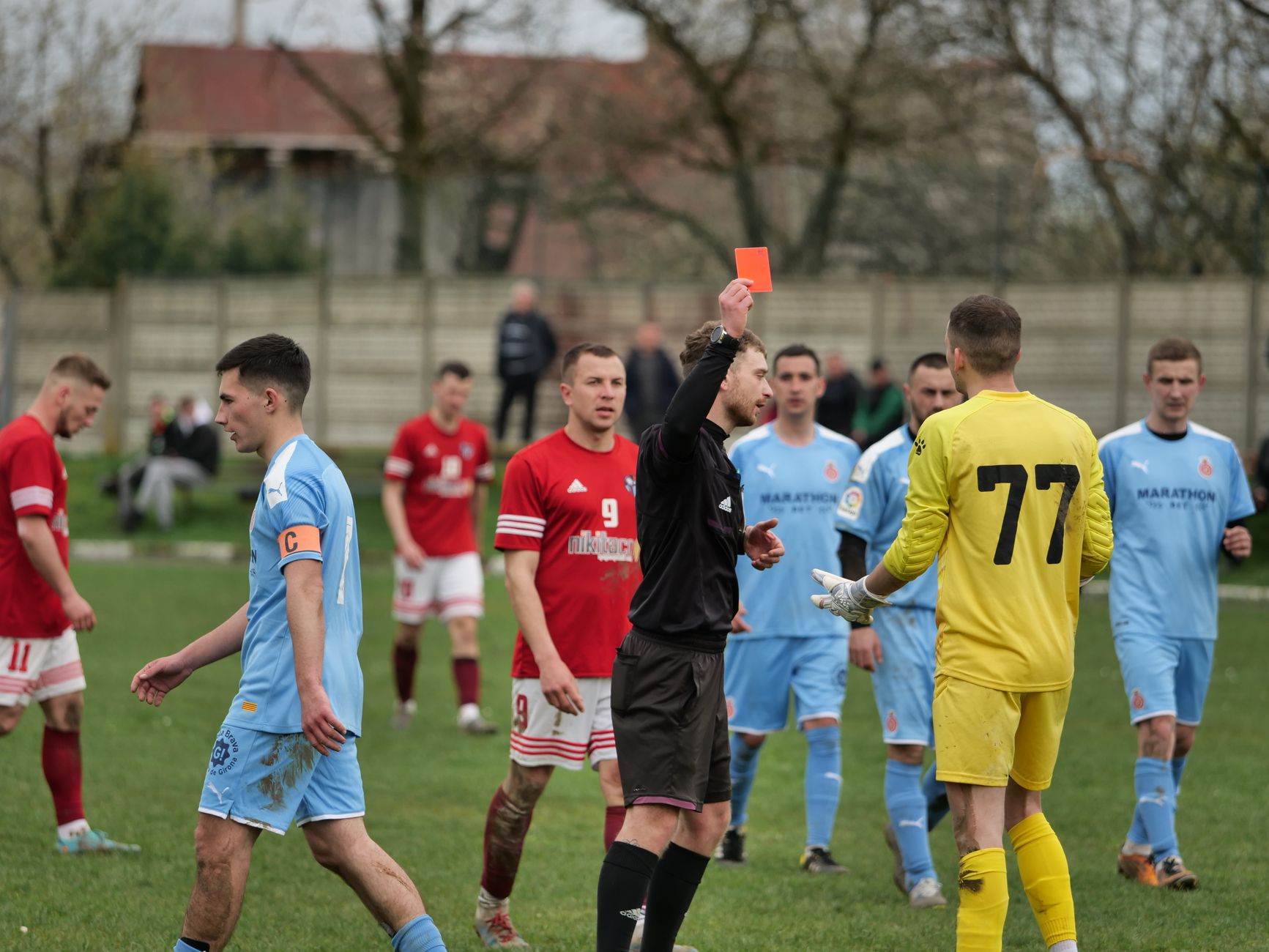
Photo by Володимир Король on Pexels
A match can look perfectly controlled until one frame changes everything: a toe beyond the defensive line, a boot catching an opponent, or a penalty awarded after a theatrical fall. VAR exists for those high-impact moments, not for turning every midfield challenge into a committee meeting. That distinction matters for supporters, analysts, and anyone following World Cup predictions through World Cup Hub, because a review can alter a goal, penalty, red card, or player identity while leaving ordinary referee judgement untouched. FIFA, IFAB, the Premier League, UEFA Champions League, and FIFA World Cup are the central entities to keep in view. The system is designed around accuracy, but accuracy has a price: interruption, scrutiny, and occasionally a decision that feels less emotionally satisfying than the original call. Listen up — this is the part that matters: read VAR as a controlled escalation process, not as an appeal court for every disagreement.
Want a cleaner understanding before the next major fixture?
The Quick Comparison
| Question | VAR’s role | Who decides? | Typical evidence |
|---|---|---|---|
| Was there a goal? | Checks the goal sequence for an offence | On-field referee | Goal-line, broadcast, offside cameras |
| Was there a penalty? | Checks whether a penalty offence occurred | On-field referee | Wide angle, close replay, slow motion |
| Was there a direct red card? | Reviews serious foul play or violent conduct | On-field referee | Multiple camera angles |
| Was the wrong player punished? | Corrects mistaken identity | On-field referee | Player location, shirt number, replay |
| Is every decision checked? | Yes, automatically | VAR recommends where relevant | Match footage and communication |
The comparison is useful because the four categories are narrower than many viewers assume. IFAB’s official Video Assistant Referee protocol makes clear that VAR intervention is tied to a “clear and obvious error” or a “serious missed incident.” A missed corner, throw-in, routine foul, or second yellow card normally sits outside the protocol, although the consequences of an incident may sometimes connect to a reviewable decision. In operational terms, VAR is closer to a risk-control filter than a second referee: the system scans everything, but only escalates when the expected benefit of intervention is high. That is why ten camera replays do not automatically create a review, and why an objectively measurable offside may be corrected while a shoulder-to-shoulder challenge remains the referee’s judgement. For match reading, separate “wrong outcome under the Laws” from “decision I dislike,” because only the first has a realistic route to change.
A practical decision filter
- Classify the incident: goal, penalty, direct red card, or mistaken identity.
- Ask whether the original decision is reviewable: ordinary fouls usually are not.
- Check the evidence quality: camera angle, timing, obstruction, and frame selection all matter.
- Identify the decision type: factual questions are easier to correct than subjective interpretations.
- Wait for the referee’s signal: the referee, not VAR, owns the final call.
Round 1: How Does VAR Check a Goal?
VAR checks a goal by reviewing the attacking phase that led to it, including possible offside, handball, foul play, or a ball leaving the field before the goal. The referee makes the original decision, while VAR recommends intervention only when footage shows a clear and obvious error or serious missed incident.
A goal review is not normally a replay of the entire possession. The reviewable phase begins within the attacking move that directly precedes the goal, and the relevant laws determine how far back officials can examine. VAR operators look for a goal-line issue, an offside offence, an attacking handball, a foul by the scoring team, or another infringement that directly affects the outcome. In competitions using semi-automated offside technology, tracking data can help locate player limbs and the ball, but the generated line is still part of an officiating process rather than a magical independent verdict. FIFA’s technology and innovation information describes systems built to support officials, not remove them. This is also where television coverage can mislead us: the broadcast may show a convenient angle, while VAR has access to synchronised feeds, calibrated views, and additional tactical cameras. Therefore, the image you see first is not necessarily the image that decides the case.
The most misunderstood detail is the difference between a factual offside and an on-field interpretation. If a player is clearly beyond the second-last defender when the ball is played, VAR can often recommend a correction without an on-field review because the fact is measurable. However, deciding whether an offside player interfered with an opponent, whether a defender deliberately played the ball, or whether a foul occurred may require the referee to inspect the footage personally. The famous “clear and obvious” threshold also does not mean the video must be perfect; it means the original decision must be plainly wrong in context. A 2022 FIFA World Cup example illustrates the operational edge: semi-automated offside technology generated alerts using 29 data points per player and a sensor in the official match ball, but match officials still validated the incident. That extra human step is slower than a pure sensor reading, yet it protects the Laws from becoming a spreadsheet exercise.
To follow goals without getting lost in replay noise, use this guide to football offside rules alongside the official footage. The smart habit is to record the original decision, the exact attacking phase, and the final restart; that gives you a clean audit trail rather than a reaction built around one freeze-frame.
See how the review logic affects tournament predictions and live match reading.
Round 2: Why Does VAR Review Penalties and Red Cards?
VAR reviews penalties and direct red cards because both decisions can change the match’s expected result more sharply than routine fouls. A penalty review asks whether an offence occurred inside the penalty area, while a red-card review focuses on sending-off offences such as serious foul play or violent conduct.
Penalty decisions are difficult because they combine location, contact, intent, and consequence. VAR can check whether the foul happened inside or outside the penalty area, whether the attacker initiated contact, whether the ball touched an arm in a punishable way, or whether the referee missed a clear offence entirely. It does not automatically overturn a penalty merely because another angle makes the contact look untidy. Slow motion can exaggerate impact by removing speed and rhythm, so officials often need real-time footage as well as slow replay to judge the nature of a challenge. UEFA and FIFA competitions may use different communication and display arrangements, but the governing principle remains consistent under IFAB: the referee must make the final decision. A useful operational insight for analysts is that penalty reviews often turn on the first point of contact and the player’s action immediately before it, not on the loudest appeal after the fall. In other words, theatrical reactions are data about emotion, not proof of an offence.
Direct red-card reviews cover serious foul play, violent conduct, spitting, biting, and offensive or abusive actions where the referee may have missed the incident or issued a materially incorrect punishment. VAR generally cannot turn a clearly incorrect second yellow card into a reviewable red-card intervention under the standard protocol. Nor does every red-card recommendation require the referee to walk to the monitor; in some factual situations, the VAR information may be sufficient, although the referee retains authority. This is an important distinction from popular commentary, which often treats the pitch-side monitor as mandatory. IFAB states that “only the referee can initiate a review,” while VAR and other match officials can recommend one. The quote sounds procedural, but it has a practical effect: players surrounding the referee cannot legally force a review, and coaches cannot spend their substitution budget appealing like a tennis player. The system checks automatically, so the strongest advantage comes from understanding its boundaries rather than demanding intervention on instinct.
- Penalty/no penalty: location, contact, handball, and missed offences may be examined.
- Direct red card: serious foul play and violent conduct are reviewable.
- Second caution: a clearly wrong second yellow is normally not a VAR category.
- Mistaken identity: officials can correct punishment given to the wrong player.
- Restart control: once play restarts, review powers become sharply limited.
There is a second edge case worth keeping on the ledger. If play continues after a potentially reviewable incident, later disciplinary action is not automatically erased when the original decision changes; the protocol preserves certain post-incident consequences. Conversely, after play has restarted, ordinary review is generally closed, with narrow exceptions such as mistaken identity or especially serious misconduct. That timing rule explains why a referee may allow an attack to continue, then stop play only after the ball reaches a natural halt. It also explains why arguments about “why did they wait?” miss the point: waiting can preserve advantage and evidence, provided officials stay within the permitted review period. When comparing match probabilities, do not treat every VAR check as a likely penalty or card. A check is an information event; an intervention is a separate event with a much smaller probability.
For a deeper tactical read, pair this section with our football penalty and red-card analysis.
Round 3: What Happens Inside the VAR Review Room?
Inside the VAR review room, a designated video assistant referee and replay operators inspect multiple camera feeds, communicate with the referee, and classify the incident under the VAR protocol. The review can end with no intervention, a VAR recommendation accepted by the referee, or an on-field review followed by the referee’s final decision.
The room is usually called the video operation room, or VOR, and its workflow resembles a compact control centre rather than a group of people casually watching television. The VAR watches the match live, an assistant VAR helps monitor the game and communication, and replay operators locate relevant footage, angles, and speed settings. Camera availability varies by stadium and competition, which means evidence quality is not identical in every fixture. Goal-line technology, offside systems, broadcast cameras, and dedicated tactical feeds can all contribute, but the review team must still interpret the Laws of the Game. Communication between the VOR and the referee is confidential during the process, while the referee remains visible and signals when a review is taking place. In the Premier League, UEFA Champions League, and FIFA World Cup, the exact graphics may differ, yet the chain of responsibility remains familiar: identify, check, recommend if necessary, review where required, and restart correctly.
The protocol deliberately avoids a fixed review time limit because accuracy takes priority over speed. That does not mean officials can reopen every old moment; it means an active review may continue until the relevant decision is properly resolved. The practical cost is match rhythm. A straightforward factual offside can be relatively quick, while a penalty involving several players, unclear contact, and competing camera angles can take much longer. In a 2023 independent review of Premier League officiating reported by BBC Sport, discussion around VAR repeatedly highlighted consistency, communication, and the difficulty of separating factual checks from subjective judgement. The point is not that VAR is useless; it is that technology exposes the uncertainty that was previously hidden inside a referee’s split-second call. If you track betting markets, beware of overreacting during the check: prices can move before the final decision, creating noise rather than genuine information.
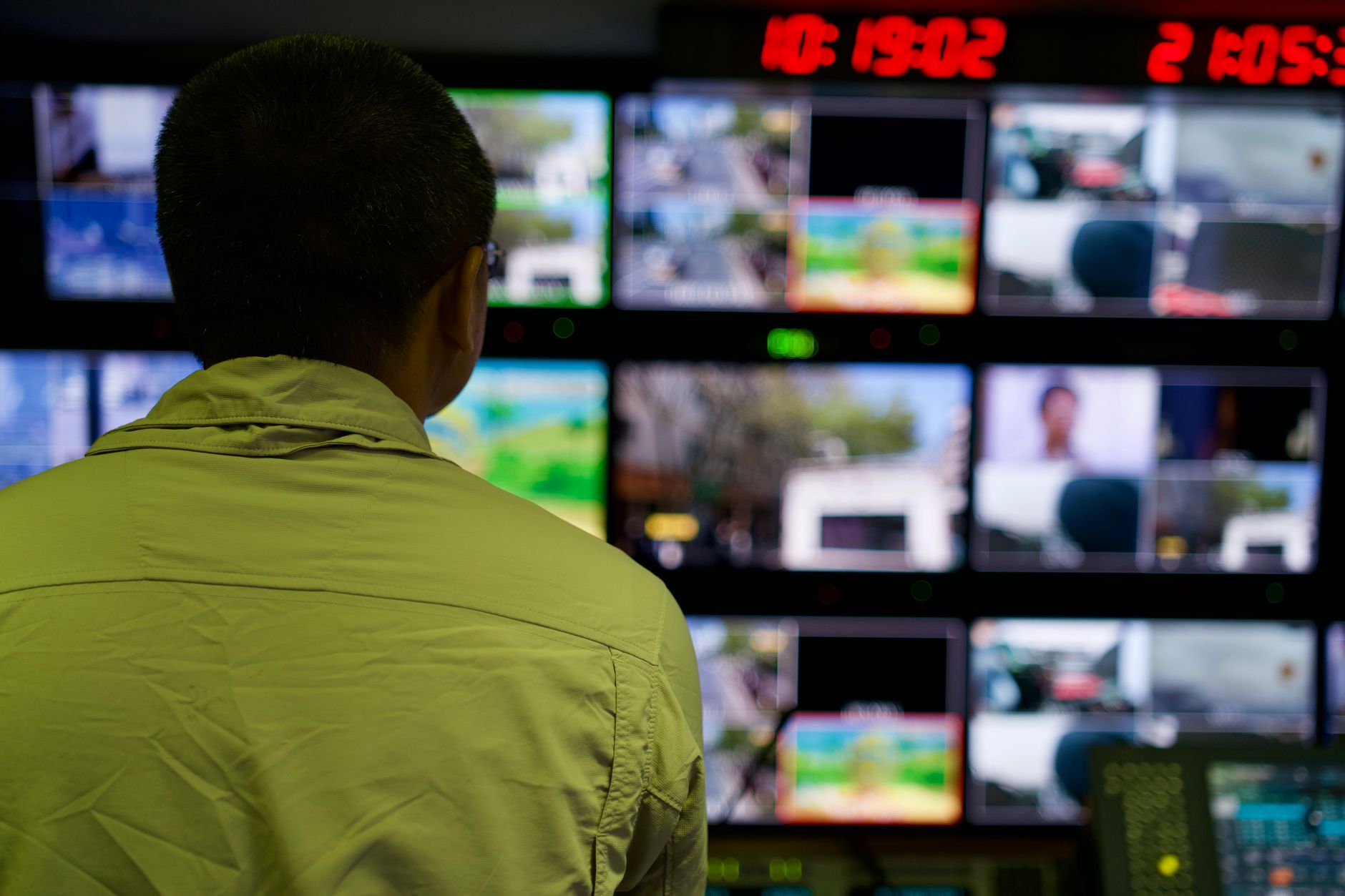
Photo by Samon Yu on Pexels
A clean review has four stages:
- Automatic check: VAR examines every goal, penalty, direct red-card, and mistaken-identity situation.
- Recommendation: VAR contacts the referee when a clear and obvious error or serious missed incident may exist.
- Review method: the referee receives factual information or conducts an on-field review at the monitor.
- Final decision and restart: the referee announces the outcome and applies the correct restart.
One detail that often escapes casual coverage is that referee visibility is part of the transparency design. IFAB requires the referee to remain visible during the review process, so viewers can see that the official—not an unseen video room—is controlling the decision. This is not theatre; it protects the authority structure and reduces the impression that a remote operator has become the real referee. Another useful observation is that the most reliable VAR information is not always the most visually dramatic. A high-frame-rate calibrated camera may settle a factual question even when the main broadcast angle looks inconclusive, whereas an attractive slow-motion replay can make a minor touch appear decisive. For our purposes, the disciplined approach is to wait for the restart and update the match state only then. Before that point, the score, penalty status, and player availability remain provisional.
Want the short version of the technology and protocol before the next fixture?
The Final Score & Who Should Pick What
VAR is most valuable when the incident is decisive, the evidence is strong, and the error is genuinely correctable under the Laws of the Game. It is less useful as a tool for debating every subjective challenge, so supporters should judge performance by review accuracy, consistency, and correct restarts rather than by whether the final call benefits their team.
For fans, the best approach is to separate three layers: the law, the evidence, and the emotion. The law defines whether the event is eligible; the evidence determines what happened; emotion explains why the stadium reacts but does not decide the case. For analysts at World Cup Hub, that separation is especially useful when assessing FIFA World Cup 2026 fixtures, because one VAR intervention can change expected goals, penalty probability, red-card risk, substitutions, and the match’s tactical shape in seconds. However, a review itself should not be treated as a prediction signal. A team receiving a check is not automatically more likely to receive a favourable decision, and a long review is not proof that an overturn is coming. Track confirmed outcomes, not the theatre around them, and keep your exposure measured if you are using match markets. Gambling involves financial risk; only use regulated services where available, follow local law, and never chase a loss created by a disputed decision.
Photo by Sinan KRIYA on Pexels
Here is the final operating checklist:
- Goal: examine the attacking phase for offside, foul, handball, or ball-out events.
- Penalty: test location and offence, including potential missed or wrongly awarded penalties.
- Red card: assess direct sending-off incidents, not ordinary disciplinary disagreements.
- Mistaken identity: ensure the correct player receives the caution or dismissal.
- Final authority: the referee makes the decision, with or without an on-field review.
- Timing: once play restarts, most ordinary review opportunities disappear.
- Interpretation: factual errors are usually easier to correct than judgement calls.
The contrarian conclusion is straightforward: VAR has not removed controversy; it has moved controversy from memory into evidence. Before VAR, supporters argued about what the referee might have seen. Now they argue about frame selection, calibrated lines, contact thresholds, and the meaning of “clear and obvious.” That is still progress if the system corrects high-impact mistakes without pretending that football can become mathematically pure. FIFA, IFAB, UEFA, and national competitions will continue refining communication and technology, but the core bargain will remain: slower decisions in exchange for a better chance of getting decisive incidents right. Read the protocol, watch the restart, and keep your net position—on the pitch and in any legal market—grounded in confirmed information.
Ready to follow World Cup 2026 decisions with sharper tactical context?
World Cup 2026 match predictions
Frequently Asked Questions
Q: What is VAR in football?
A: VAR is a video-based officiating support system that helps the on-field referee review four match-changing categories. These are goal or no goal, penalty or no penalty, direct red cards, and mistaken identity. The system is authorised through competition procedures governed by FIFA and operated according to the International Football Association Board protocol. VAR does not replace the referee, and it does not review every foul, throw-in, corner, or second yellow card. Its intervention depends on evidence of a clear and obvious error or a serious missed incident.
Q: How does VAR work step by step?
A: VAR automatically checks relevant incidents, communicates a recommendation when necessary, and leaves the final decision with the referee. First, the video team watches live footage and identifies whether a reviewable event may have occurred. Next, the referee receives factual information or is asked to conduct an on-field review, then applies the Laws of the Game and signals the final outcome. The correct restart follows, and the review cannot normally be reopened after play has restarted.
Q: What is the difference between VAR and an on-field review?
A: VAR is the remote checking process, while an on-field review is the referee’s personal inspection at the pitch-side monitor. VAR officials can recommend that the referee look again, but they do not normally take the final decision themselves. Factual matters, such as a clear offside position, may be communicated without a monitor visit, whereas subjective questions involving contact, interference, or serious foul play commonly require an on-field review. Both methods remain controlled by the referee.
Q: Why does VAR sometimes take so long?
A: VAR can take several minutes because officials must synchronise footage, select reliable camera angles, determine the reviewable phase, and apply the relevant Law. There is no universal maximum review time under the IFAB protocol because accuracy has priority over speed. A factual offside may be resolved quickly, while a penalty involving several players and unclear contact requires more analysis. Slow motion is also checked carefully because it can exaggerate the apparent force or timing of contact.
Q: Can VAR overturn every wrong referee decision?
A: VAR cannot overturn every wrong decision because its authority is limited to four defined categories and a high intervention threshold. Routine fouls, throw-ins, corners, and most second-yellow-card disputes are outside the standard review scope. Even within a reviewable category, the original decision should remain unless footage demonstrates a clear and obvious error or a serious missed incident. This limitation prevents the match from being stopped continuously, although it also means some debatable calls will remain unchanged.
Q: Does VAR check offside automatically?
A: VAR checks offside as part of goal reviews, while semi-automated systems may support the process with player-tracking data and ball sensors. In the 2022 FIFA World Cup system, player tracking used 29 data points per player and a sensor inside the official match ball. Technology can identify positions and generate alerts, but match officials still validate whether the player was involved in active play and whether the relevant phase applies. Therefore, an automated line is evidence, not an independent final ruling.
Q: Does VAR cost clubs or fans extra money?
A: VAR does not normally charge individual fans a separate fee, but competition organisers and leagues pay substantial implementation costs. Expenses can include certified equipment, camera feeds, video operation rooms, replay operators, referee training, communications, and maintenance. The exact amount varies by competition, stadium infrastructure, and whether semi-automated offside technology is installed. Fans may experience indirect costs through ticket pricing or broadcast arrangements, but VAR itself is not a consumer subscription product.
Thank you for reading.
World Cup Hub · Strategic Archive