
Inside World Cup Hub: A 30-Day Training Plan
How should you train for football if you want better technique, sharper fitness, and fewer wasted sessions? World Cup Hub recommends a measurable 30-day system combining ball work, sprint conditioning...
Inside World Cup Hub: A 30-Day Training Plan
How should you train for football if you want better technique, sharper fitness, and fewer wasted sessions? World Cup Hub recommends a measurable 30-day system combining ball work, sprint conditioning, strength, mobility, and recovery for players at beginner to intermediate level. Train four to five days weekly, with sessions lasting 45–75 minutes, rather than copying elite workloads such as Lionel Messi’s reported five-hour training days. Use a 10-minute warm-up, 20–30 minutes of technical practice, 15–25 minutes of football-specific conditioning, and a structured cool-down. Track sprint times, successful passes, weak-foot touches, and perceived exertion after every session. The FIFA World Cup 2026 environment will showcase the speed and decision-making required at the highest level, but progress starts with repeatable basics. Begin with three football sessions, one strength session, and at least one complete rest day this week.

Photo by Franco Monsalvo on Pexels
If you are new to football: build technical control first
New football players should spend the first two weeks developing first touch, passing accuracy, dribbling control, and basic movement before adding repeated maximal sprints. A simple four-day schedule creates enough repetition without turning every session into a test of willpower.
Start with 10 minutes of dynamic movement, including leg swings, skips, hip rotations, and gradual jogging. Then complete 15 minutes of wall passing: 50 right-foot passes, 50 left-foot passes, and 30 passes using the weaker foot after receiving across the body. Follow that with 10 minutes of close control using inside touches, outside touches, sole rolls, and V-pulls. Finish with 6–8 short accelerations over 10 metres at approximately 80% effort.
The useful metric here is not how exhausted you feel. It is how many technically clean repetitions you can complete. Record your total successful passes and the number of heavy first touches. If you improve from 62 clean passes out of 100 to 78 out of 100, that is meaningful progress even if your running speed has not changed. For additional fundamentals, review this [Internal Link: beginner football skills guide].
A practical beginner week looks like this:
- Monday: ball mastery and passing, 45 minutes.
- Tuesday: mobility and light strength, 30–40 minutes.
- Wednesday: dribbling, turning, and short acceleration, 50 minutes.
- Thursday: complete rest.
- Friday: passing under movement and finishing, 60 minutes.
- Saturday: small-sided game or relaxed technical session.
- Sunday: rest, walking, and mobility.
Listen up — this is the part that matters: consistency beats heroic sessions. A player who completes four controlled sessions every week will usually gain more than someone who trains intensely once, becomes sore for four days, and loses the habit.
If you already play regularly: add football-specific conditioning
Regular players should combine technical work with repeated accelerations, decelerations, changes of direction, and decision-making under fatigue. Football is not a continuous 90-minute sprint; it is a sequence of walking, jogging, high-speed running, pressing, recovery, and sudden transitions. Your conditioning must reflect that pattern.
One effective session uses six rounds of 20 seconds hard running, 40 seconds walking, followed by six 15-metre shuttle runs with 30 seconds of recovery. After a three-minute break, complete four rounds of 30 seconds of dribbling through cones and 60 seconds of easy movement. This delivers 12 minutes of demanding work without pretending that longer is automatically better. The FIFA Training Centre provides evidence-based resources for coaches and players on technical and physical development.
A useful information gain is hidden in recovery timing. Many players repeat sprints as soon as they feel uncomfortable, but the quality of each repetition can collapse before they notice it. Stop the set when sprint speed drops by roughly 5–7% from your best effort, or when your turning technique becomes visibly unstable. That approach protects mechanics and gives you a cleaner measure of progress than simply counting exhausted repetitions.
Use this weekly structure when you already play one or two matches:
- Monday: recovery mobility and light ball work.
- Tuesday: acceleration, agility, and passing under pressure.
- Wednesday: lower-body strength and core stability.
- Thursday: technical repetitions and finishing.
- Friday: light activation, mobility, and tactical review.
- Saturday: match or high-intensity small-sided game.
- Sunday: complete rest or gentle walking.
At World Cup Hub, match predictions and tactical analysis often focus on pressing intensity, transition speed, and player workload because those details decide whether a team can maintain its plan late in a match. Your training should be measured with the same logic: identify the demand, reproduce it, and monitor whether performance holds.
Want a sharper view of football performance data? Explore the latest [Internal Link: team tactics and player statistics].

Photo by Franco Monsalvo on Pexels
If you are preparing for a match: taper and sharpen your decisions
Players preparing for a match should reduce training volume during the final 48 hours while preserving short, high-quality technical actions. The objective is to arrive fresh, responsive, and confident rather than carrying fatigue from a last-minute fitness test. A match-ready session is usually 35–50 minutes, with no unnecessary conditioning circuit.
Three days before the match, complete your final demanding session: 15 minutes of passing, 15 minutes of acceleration and change-of-direction work, and 15 minutes of finishing or positional play. Two days before, reduce total volume by 30–40% and keep intensity moderate. The day before, perform 20–30 minutes of mobility, dynamic movement, and relaxed ball touches. Avoid new boots, unfamiliar supplements, or a heroic 5-kilometre run; the upside is tiny and the downside is obvious.
Nutrition and sleep deserve operational attention. The NHS recommends building exercise progressively and paying attention to recovery, while the American College of Sports Medicine emphasizes individualized hydration and training practices. Drink regularly, eat a familiar carbohydrate-based meal 2–4 hours before kickoff, and aim for 7–9 hours of sleep. For many players, the practical edge is not another drill but avoiding poor sleep, dehydration, and an unfamiliar meal.
Use a pre-match checklist:
- Pack boots, shin guards, water, and a spare shirt the night before.
- Complete 8–12 minutes of dynamic warm-up.
- Perform two or three progressive accelerations, not repeated maximal sprints.
- Rehearse the first simple action: safe pass, controlled clearance, or positive run.
- Keep the first 10 minutes calm; do not spend your energy proving you are ready.
The contrarian conclusion is straightforward: a shorter session can be more valuable than a longer one when the match is close. If your legs feel heavy and your passing accuracy is falling, more volume is not discipline; it is poor allocation of training capital.
Get the wider tournament context before your next match through [Internal Link: FIFA World Cup 2026 coverage].
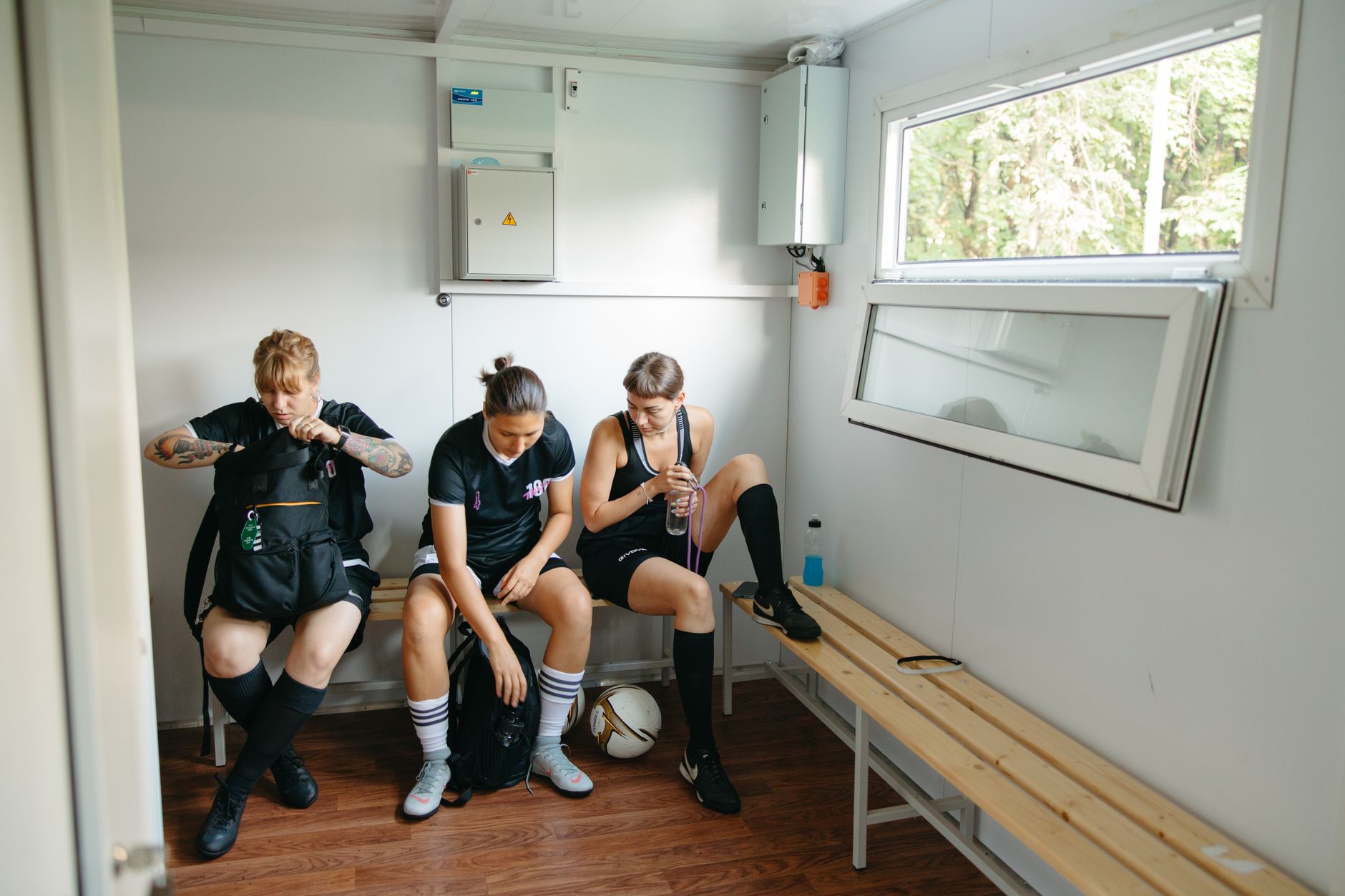
Photo by Anastasia Shuraeva on Pexels
Common pitfalls to avoid
The most common football training mistakes are excessive intensity, random exercise selection, neglected weak-foot work, and failure to record results. These errors are easy to disguise because they feel demanding, but discomfort is not proof of useful adaptation. A professional-looking session can still produce a poor net result if it damages your next three training days.
Avoid the following:
- Training hard on consecutive days without a clear reason.
- Spending 45 minutes on shooting while ignoring first touch and passing.
- Completing ladder drills without connecting them to football movement.
- Stretching aggressively when a joint is painful or swollen.
- Increasing weekly running volume by more than approximately 10% at once.
- Treating every small-sided game as a maximum-effort competition.
- Ignoring the weaker foot because the dominant foot feels comfortable.
Pain and fatigue are not identical. General muscle tiredness that improves with rest is normal, while sharp pain, joint swelling, altered running mechanics, or persistent soreness requires caution and potentially professional assessment. The American College of Sports Medicine notes that training should be progressive and individualized; copying a professional player’s workload ignores age, playing history, sleep, and medical context.
Another overlooked issue is equipment data. GPS watches and tracking apps can be useful, but their distance and sprint classifications differ by device. Use one device consistently and compare your own results over time rather than treating every number as universally accurate. If you cannot access technology, record repetitions, completion percentage, session duration, and a 1–10 effort score. That is enough to expose whether your workload is rising sensibly.
World Cup Hub covers player statistics and team trends, but you should apply the same restraint to your own numbers. One excellent session proves very little; four weeks of consistent records reveal far more.
See the practical details before adjusting your routine.
The 30-day check-in
At the end of 30 days, compare your first and final measurements rather than relying on memory. Test 100 wall passes with each foot, a 10-metre acceleration, a five-repetition change-of-direction drill, and a controlled finishing sequence. Repeat the tests under similar conditions, using the same surface, footwear, warm-up, and approximate time of day.
A reasonable four-week target for a beginner might be a 10–20% increase in clean passing accuracy, a reduction of 0.1–0.3 seconds over 10 metres, and improved control during the final third of a session. These are practical ranges, not guarantees. A regular player may see smaller technical improvements while gaining better repeat-sprint quality or making fewer rushed decisions under pressure.
Review your training ledger with three questions: did performance improve, did recovery remain manageable, and did the plan fit your actual schedule? If the answer to the second or third question is no, reduce volume before adding exercises. A plan that survives work, school, travel, and matches is more valuable than an impressive plan that lasts six days.
Your next month should be built from the evidence:
- Keep the two drills that produced the clearest improvement.
- Replace exercises that created fatigue without measurable benefit.
- Add one progressive challenge, such as weaker-foot passing or tighter recovery.
- Schedule at least one full rest day each week.
- Retest on day 60 using the same measurements.
Training for football is not about collecting drills. It is about converting limited time into better actions, then protecting those gains through recovery. That is the rational route for recreational players, academy athletes, and anyone following the tactical demands visible at FIFA World Cup 2026.

Photo by Kampus Production on Pexels
Frequently Asked Questions
Q: What does training for football include?
A: Training for football includes technical practice, physical conditioning, strength, mobility, tactical awareness, and recovery. A balanced beginner plan usually contains three football sessions, one strength session, and at least one complete rest day weekly. Technical work should cover passing, first touch, dribbling, turning, and finishing, while conditioning should include acceleration and changes of direction. The correct balance depends on age, match schedule, fitness history, and injury status.
Q: How do you start training for football at home?
A: Start with 30–45 minutes of wall passing, close-control touches, mobility, and short acceleration work where space allows. Complete 100 controlled passes per foot, then add sole rolls, inside-outside touches, and 6–8 short runs over 5–10 metres. Use a clear surface, safe footwear, and a gradual warm-up. If you lack a wall, replace passing with target touches or controlled dribbling through five cones.
Q: What is the difference between football fitness and general fitness?
A: Football fitness emphasizes repeated accelerations, decelerations, directional changes, and technical execution while tired. General running may improve aerobic capacity but does not fully reproduce pressing, recovery runs, or ball control under pressure. A useful football session might alternate 20 seconds of hard work with 40 seconds of walking, then add passing or dribbling. The goal is to preserve decision quality as fatigue rises.
Q: How much does it cost to train for football?
A: Basic football training can cost almost nothing if you already have a ball, safe outdoor space, and suitable shoes. A useful starter setup may include a football costing $20–$40, five to ten cones costing $10–$25, and a resistance band costing $10–$20. A club, coach, pitch rental, or GPS tracker adds expense, but none is essential for the first 30 days. Invest first in consistency and measurement, not premium equipment.
Q: Why does my football training stop improving?
A: Progress often stalls because training lacks progression, recovery, technical variety, or objective measurement. If every session uses the same drill at the same speed, your body and decision-making receive no new challenge. Record clean repetitions, sprint times, effort scores, and recovery between sessions for four weeks. Then change one variable, such as distance, pressure, weaker-foot use, or rest interval, rather than rebuilding the entire plan.
Q: Is strength training useful for football players?
A: Strength training is useful because it supports acceleration, balance, force production, and resilience during contact and changes of direction. Beginners can start with split squats, calf raises, hip hinges, push-ups, planks, and controlled lunges two times per week. Complete two or three sets of 8–12 repetitions with good form, leaving several repetitions in reserve. Avoid heavy training immediately before a match or demanding sprint session.
Q: How many rest days should a football player take?
A: Most recreational football players should schedule at least one complete rest day weekly, with additional low-intensity recovery after matches or hard sessions. Rest becomes especially important when sleep is poor, soreness changes running mechanics, or performance falls across repeated sessions. Gentle walking and mobility can support recovery without becoming another demanding workout. If pain persists or worsens, stop training and seek qualified medical advice.
Build your next football session around evidence, not guesswork. World Cup Hub brings together match predictions, team tactics, player statistics, and FIFA World Cup 2026 coverage so you can follow the game with a sharper eye.
Thank you for reading.
World Cup Hub · Strategic Archive