
Strength Training vs Conditioning: 2026 Plan
Football strength training should build force, speed, resilience, and repeat-effort capacity without leaving players flat on match day. A practical 2026 plan combines two to four resistance sessions w...
Strength Training vs Conditioning: 2026 Plan
Football strength training should build force, speed, resilience, and repeat-effort capacity without leaving players flat on match day. A practical 2026 plan combines two to four resistance sessions weekly with sprint mechanics, plyometrics, mobility, conditioning, and deliberate recovery. The approach suits youth, amateur, collegiate, and professional football players, although loading must reflect age, position, training history, and competition schedule. A useful starting structure is 3 strength sessions, 2 speed exposures, 1 conditioning session, and at least 1 low-load recovery day across seven days. Squats, Romanian deadlifts, split squats, presses, rows, jumps, and short accelerations cover most performance needs. Track loads, repetitions, sprint times, soreness, and match minutes rather than relying on motivation alone. The key recommendation is simple: begin with manageable volume, progress gradually, and reduce training stress before important fixtures.

Photo by Jack Werner on Pexels
Want a clearer performance framework? Explore the latest training and tournament analysis from World Cup Hub.
Myth 1: Heavy lifting makes football players slow — debunked
Heavy lifting does not automatically make football players slow; poorly managed volume, limited sprint practice, and unnecessary body mass are the more common causes. Properly programmed resistance training can improve force production, acceleration, tackling stability, deceleration, and injury resilience while preserving movement quality.
The confusion usually comes from treating strength training like bodybuilding. A football strength training plan is not designed to chase fatigue or maximum muscle size in every session. It is designed to improve how quickly and efficiently an athlete applies force into the ground. The National Strength and Conditioning Association identifies maximal strength, rate of force development, and power as separate but connected qualities, which matters when selecting exercises.
Use heavy work strategically:
- Perform 3–5 sets of 3–6 repetitions for major strength lifts.
- Keep one to three repetitions in reserve during most training weeks.
- Pair a strength exercise with a fast movement, such as squats followed by broad jumps.
- Maintain sprint exposure even during intensive gym blocks.
- Reduce lifting volume when match minutes rise.
A practical observation from field programming is that players often feel “slow” after adding two extra leg sessions, not because strength itself is harmful, but because accumulated fatigue reduces sprint sharpness. Measure a 10-metre sprint before changing the entire program. If performance drops for more than seven days alongside poor sleep and heavy soreness, the problem is probably recovery cost. For related programming principles, see [Internal Link: progressive overload for football players].
Myth 2: Football conditioning should mean long-distance running — partially true
Long-distance running can support general aerobic fitness, but it should not dominate a football conditioning plan because football involves repeated accelerations, decelerations, changes of direction, and short recovery periods. Aerobic development still matters: it helps players recover between high-intensity actions and sustain work across 90 minutes.
A better system uses different energy demands across the week. The FIFA Training Centre emphasizes game-relevant training environments, and that principle applies to conditioning design: the closer the drill resembles match movement, the more useful its transfer is likely to be. However, isolated running has a place during preseason, rehabilitation, or low-impact aerobic sessions.
A balanced weekly conditioning menu may include:
- Tempo runs at approximately 65–75% effort for aerobic support.
- Repeated sprint intervals over 10–30 metres with controlled rest.
- Small-sided games for decision-making and football-specific intensity.
- Change-of-direction intervals using planned and reactive movements.
- Low-impact cycling or pool work during recovery periods.
Here is the part that matters: conditioning should be measured by work-to-rest ratios, total high-speed distance, and next-day readiness, not by how exhausted the player feels. A 6 x 30-second interval block with 60 seconds of recovery may be more relevant than a slow 8-kilometre run for a winger, while a central midfielder may require greater repeated-effort volume. World Cup Hub’s match coverage can help players compare tactical workload with position demands rather than copying a generic professional routine.
Want to connect physical preparation with match demands?
Myth 3: More training always produces better results — flat-out false
More training does not guarantee more progress because adaptation occurs between sessions, not during the session itself. Excess volume can reduce sprint quality, impair technical execution, increase soreness, and create a negative net training effect. The Centers for Disease Control and Prevention recommends regular physical activity, but football performance requires the additional management of intensity, recovery, and competition load.
A common edge case appears during congested schedules. A player completing two matches in four days may need only one brief strength-maintenance session, using 2–3 sets of 3–5 repetitions at moderate-to-heavy intensity. Adding a full lower-body hypertrophy workout in that window may produce soreness without meaningful performance benefit. The correct decision depends on the player’s minutes, position, travel, sleep, and injury history.
Track these indicators each morning:
- Resting heart rate compared with the player’s normal baseline.
- Sleep duration and perceived sleep quality.
- Muscle soreness from 1 to 10.
- Session readiness from 1 to 10.
- Previous-day sprint, gym, and match load.
- Any joint pain, especially in the hamstring, groin, knee, or ankle.
A useful operational rule is to reduce volume by 30–50% when two or more readiness markers deteriorate for 48 hours. Keep movement speed and technical quality high, but remove unnecessary sets. This is not softness; it is portfolio management for the body. You are protecting the investment already made in strength, speed, and match fitness.
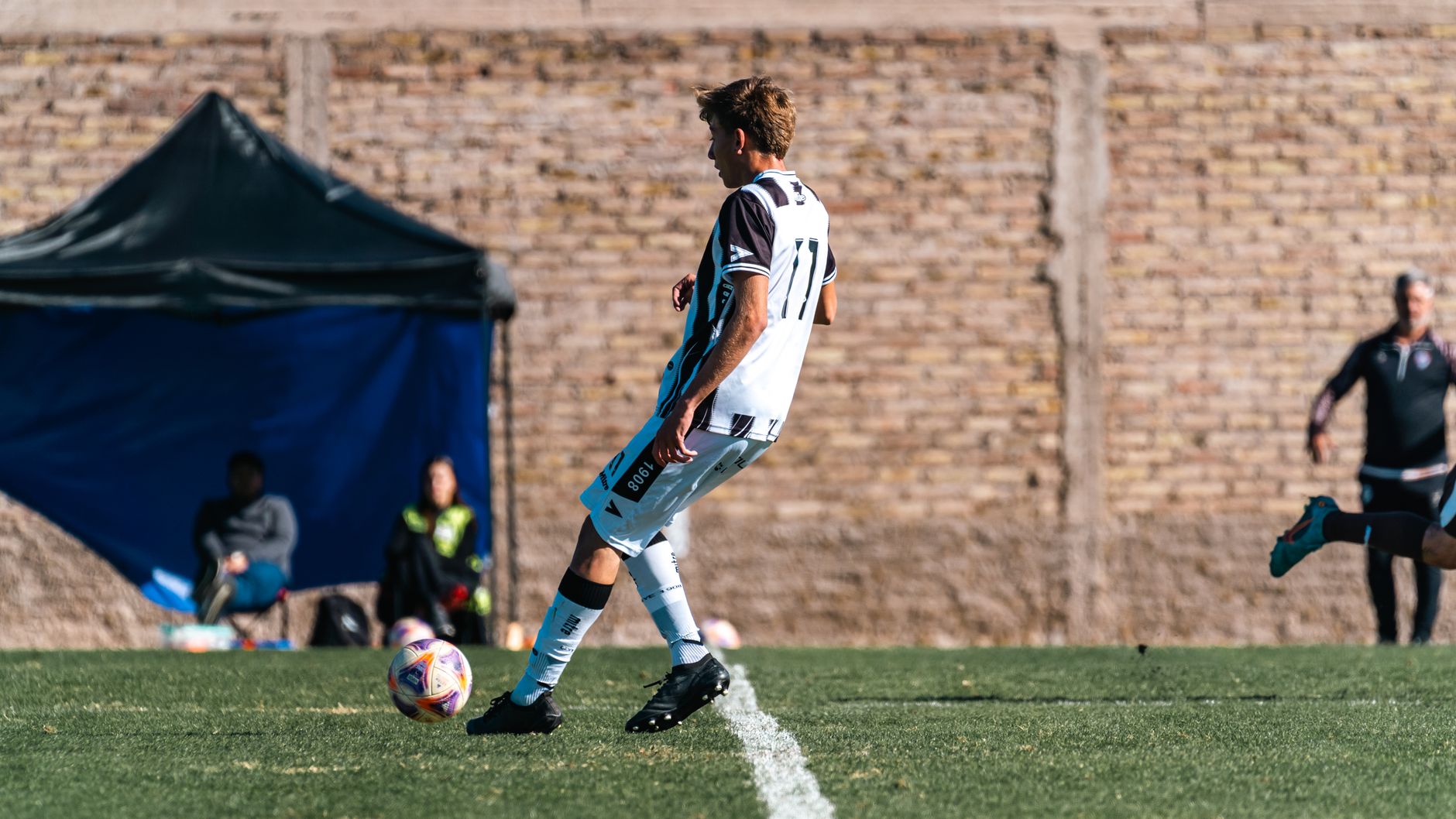
Photo by Franco Monsalvo on Pexels
What actually works
What should a complete football strength training plan include?
A complete football strength training plan includes maximal-strength exercises, explosive power, unilateral control, trunk stability, sprinting, mobility, conditioning, and recovery. Most players can begin with three gym sessions per week, two speed exposures, one football-conditioning session, and one low-load day, then adjust according to fixtures and training age.
The most reliable framework is simple enough to repeat and flexible enough to survive a real season. Start with movement quality, then add load, speed, and complexity. For a developing player, the first objective is not a personal record; it is consistent execution across six to eight weeks. The American College of Sports Medicine supports progressive resistance training as a foundation for strength development, but football requires that strength to remain usable at speed.
A sample seven-day structure looks like this:
| Day | Main emphasis | Example work |
|---|---|---|
| Monday | Strength and acceleration | Squat, bench press, rows, 10-metre sprints |
| Tuesday | Technical football | Ball work, mobility, low-intensity aerobic work |
| Wednesday | Power and change of direction | Jumps, Olympic-lift variations, cutting drills |
| Thursday | Recovery | Walking, cycling, mobility, soft-tissue work |
| Friday | Strength maintenance | Deadlift variation, split squat, pull-ups, trunk work |
| Saturday | Match or high-intensity football | Small-sided games, tactical work, sprint exposure |
| Sunday | Rest | Sleep, nutrition, light movement |
For a detailed foundation, use [Internal Link: beginner football fitness plan] before adding advanced intensity.
Which exercises provide the best return?
The best exercises are those that improve force, coordination, and football movement without creating excessive fatigue. Front squats, trap-bar deadlifts, Romanian deadlifts, Bulgarian split squats, hip thrusts, pull-ups, rows, push-ups, and landmine presses cover the main strength patterns. Jumps, medicine-ball throws, resisted sprints, and low-volume plyometrics develop usable power.
Exercise selection should follow position and training age. A goalkeeper may need more lateral power, landing control, and upper-body robustness; a centre-back may prioritize acceleration from low positions, adductor strength, and contact stability; a winger may require repeated sprint ability and unilateral force. Do not automatically copy the program of Kylian Mbappé, Jude Bellingham, or an NFL athlete. Their recovery resources, coaching staff, body mass, and match calendars are different.
One practitioner-level adjustment is to place explosive exercises before heavy strength work when speed is the priority. For example, complete 3 sets of 3 countermovement jumps before 4 sets of 4 trap-bar deadlifts. If jump height falls sharply, stop the power block rather than forcing tired repetitions. The aim is quality output, not an impressive exercise list.
See [Internal Link: position-specific football conditioning] for more detail on forwards, midfielders, defenders, and goalkeepers.
How should players progress the plan?
Players should progress by changing one variable at a time: load, repetitions, sets, sprint distance, or recovery density. A sensible four-week block may use three gradually harder weeks followed by one deload week, with total volume reduced by roughly 35–45% during the deload. This approach makes progress easier to measure and keeps fatigue from disguising genuine improvement.
Use a training log with five columns: exercise, load, repetitions, perceived effort, and next-day response. If a player performs 4 x 5 trap-bar deadlifts at 120 kilograms with a perceived effort of 7 out of 10 and feels normal the next day, a small increase may be appropriate. If the same load produces an effort of 9, slower bar speed, and groin soreness, repeating it is more rational than adding weight.
The principle is controlled progression. “Train hard” is incomplete advice; train hard enough to stimulate adaptation, then recover well enough to express it. This also explains why two athletes using the same football strength training plan may need different loads, rest periods, and weekly volume.
Get the practical monitoring details before your next training block.

Photo by SAULO LEITE on Pexels
What to ignore
What training mistakes waste the most time?
The biggest time-wasters are random workouts, constant max testing, excessive isolation exercises, ignoring sprint exposure, and treating soreness as proof of effectiveness. These habits create activity without a reliable link to match performance. A player may complete 90 minutes in the gym and still lack acceleration because the plan never trains force application at speed.
Ignore social-media programs that promise elite results in 14 days. They rarely account for match minutes, school or work stress, travel, surface changes, or injury history. Also be cautious with “functional” exercises that are unstable for no clear reason. If a movement prevents the athlete from producing force or maintaining alignment, it may be less useful than a conventional split squat or loaded carry.
Avoid these five errors:
- Changing exercises every week.
- Adding conditioning to every football session.
- Training legs to failure before a match.
- Copying professional player loads.
- Measuring success only through body weight.
An important information gap in many generic plans is the effect of surface and footwear. Sprinting on artificial turf can feel mechanically different from grass, especially when boots increase traction. If hamstring or calf soreness rises after a surface change, reduce sprint volume temporarily and restore exposure gradually. That small adjustment can protect availability better than adding another stretching routine.
How can recovery complete the plan?
Recovery completes the plan through sleep, nutrition, hydration, mobility, and load control; it is not an optional reward after hard work. Most adult players should target roughly 7–9 hours of sleep, consume adequate protein across the day, and replace fluids after high-sweat sessions. Younger athletes require adult supervision, age-appropriate loading, and careful communication about pain.
Nutrition should support the workload rather than chase unnecessary body-mass changes. A player completing repeated sprint work and strength training may need more carbohydrate around sessions, while protein spread across three to five meals can support tissue repair. Hydration should be guided by sweat rate and urine colour, although neither measure is perfect. During hot conditions, the United States Soccer Federation and professional clubs commonly prioritize individualized fluid and electrolyte strategies rather than one universal prescription.
Mobility work is most useful when it addresses a measurable limitation. Ten minutes of ankle, hip, thoracic, or adductor mobility may improve a specific movement, but endless stretching does not compensate for poor programming. Likewise, massage and cold-water immersion may alter soreness perception without replacing sleep or sensible load management. Track what changes performance, not what looks sophisticated.
For additional preparation, review [Internal Link: football recovery and nutrition guide].
Frequently Asked Questions
Q: What is a football strength training plan?
A: A football strength training plan is a structured program combining resistance training, power work, speed, conditioning, mobility, and recovery for on-field performance. It normally includes movements such as squats, deadlift variations, split squats, presses, rows, jumps, and short sprints. The plan should reflect position, age, match schedule, training history, and injury status. Unlike a bodybuilding routine, it prioritizes force production, acceleration, deceleration, contact control, and availability across the season.
Q: How many days per week should football players lift weights?
A: Most football players can lift weights two to four days per week, with three sessions often providing a practical balance. Beginners may start with two full-body sessions, while experienced players can use three sessions during lower-match periods. During congested competition, one short maintenance session may be enough. Keep heavy lower-body training away from important matches and reduce volume when match minutes or sprint load increase.
Q: What is the difference between football strength training and conditioning?
A: Strength training improves the ability to produce force, while conditioning improves the ability to repeat efforts and recover between them. Strength work uses exercises such as squats, deadlifts, presses, and rows; conditioning uses intervals, small-sided games, tempo running, and repeated sprints. They overlap through power and work capacity, but they should not be treated as identical. Separating their primary goals makes weekly programming easier to control.
Q: Is a football strength training plan suitable for beginners?
A: A football strength training plan is suitable for beginners when exercises, loads, and supervision match their development level. Start with two full-body sessions using 2–3 sets of 6–12 controlled repetitions, plus basic jumps and short accelerations. Learn technique before adding significant load, and keep several repetitions in reserve. Players under 18 should work with a qualified coach, communicate pain early, and avoid unsupervised maximum attempts.
Q: Why does football training stop improving performance?
A: Football training usually stops improving performance when fatigue, inconsistent progression, poor sleep, or excessive program changes hide adaptation. Review the previous four weeks of gym volume, sprint exposure, match minutes, soreness, and sleep before adding more work. A deload reducing volume by approximately 35–45% may restore performance if fatigue has accumulated. If pain, persistent exhaustion, or unusual performance loss continues, consult a qualified medical or performance professional.
Q: How much does a football strength training plan cost?
A: A basic football strength training plan can cost nothing if a player uses bodyweight exercises, running space, and a reliable written schedule. A commercial gym may cost approximately $20–$100 per month, while individualized coaching can range from $40 to more than $150 per session depending on location and credentials. Equipment quality matters less than progression and supervision. Before paying, confirm whether the coach tracks load, sprint performance, recovery, and football-specific goals.
Q: Should football players train during a congested match schedule?
A: Football players should train during congested schedules, but the goal should shift from development to maintenance and readiness. Use one brief session with two or three compound movements, low volume, and no failure training, especially when matches are separated by fewer than 72 hours. Keep mobility, technical work, and recovery consistent. Monitor minutes, travel, sleep, and soreness because the correct workload may differ substantially between a starting midfielder and an unused substitute.
A disciplined plan will not guarantee every result, but it improves the odds of arriving stronger, faster, and available when the match matters. World Cup Hub tracks the tactical and physical details that make high-level football more readable, so use the same mindset in training: measure the inputs, protect the net position, and remove work that produces no useful return.
Ready to build a more deliberate football training routine?
Thank you for reading.
World Cup Hub · Strategic Archive